
SPAIN is set to experience a Total Solar Eclipse on:- Wednesday, 12 August 2026. This happens when the Moon passes over the Sun. Sadly, the UK will not get the maximum effect, but we are still in for an amazing astronomical spectacle!
We will get to see an amazing Partial Eclipse. Occurring low in the western evening sky, requiring an unobstructed view of the horizon, this is going to be a very unusual sight. The Solar event begins at around:- 6:17 pm, with maximum coverage near 7:12 pm, in London (local times vary slightly by Region).
On Merseyside we will experience a Deep Partial Solar Eclipse beginning at:- 6:13 pm, reaching a maximum coverage of about:- 92% at:- 7:10 pm, and ending at:- 8:04 pm. The Partial Solar Eclipse will be the deepest seen from the UK since 1999.
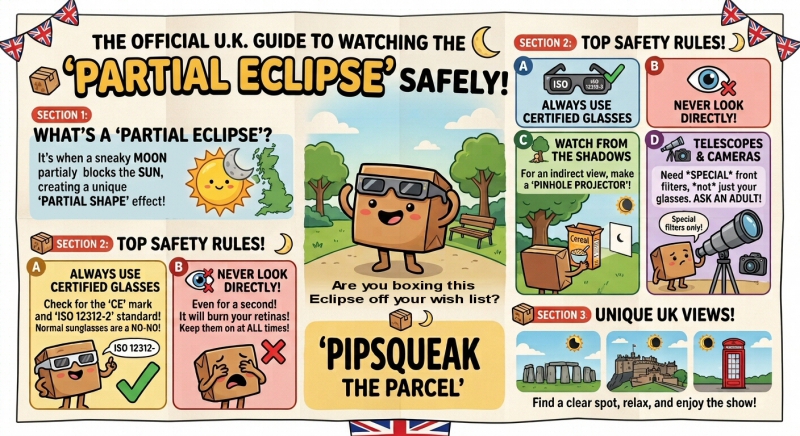
Do not use telescopes or binoculars to watch this as it increases the risks of permanent retinal damage. Remember even though it's close to Sunset, looking directly at the Sun, especially through any magnification devices can permanently damage your eyesight. Use specially made ISO Certified Glasses:- ISO 12312-2 protection. You can also construct pinhole projection boxes to watch the event safely.
The Southport Astronomical Society will be hosting a viewing of the Partial Solar Eclipse at:- The Hesketh Park Observatory. The public are invited to join them. Please remember to bring your own viewers, and follow the safety advice given to you, especially as this is not a Total Eclipse in the UK. A few viewing glasses will be available, if you can't get them yourself, but will have to be shared. More information about the Southport Astronomical Society can be found online at:- SouthportAstro.Org.
It's worth adding that Sunset on Merseyside will be at:- 8:47 pm BST, and the night will also offer a heavenly display. The Perseid meteor shower is active between:- 17 July and 24 August 2026. The shower will peak overnight on the same night of the Eclipse, and it is predicted you should expect to see up to:- 50 to 100 meteors per hour; under clear dark skies. The best hours to see this display are between:- Midnight through pre-dawn hours (around 1 am to dawn) on:- 13 August 2026. This shower is made of the debris left behind by Comet 109P / Swift-Tuttle. The bright fireballs and persistent trains of light appear to originate from the constellation of Perseus. These, unlike the Eclipse, are visible with the naked eye. We strongly advise you to find an open dark space away from lights, then let your eyes adjust for:- 20 to 30 minutes.
Let's hope we have good visibility. The long term forecast for the area predicts that we will be experiencing high-pressure patterns across the UK. This should bring mostly dry weather with below-normal overall rainfall. So, fingers crossed, we will all get 2 fantastic free shows.
Fun fact:- According to the Royal Museums Greenwich, within the UK the next Full Solar Eclipse isn't expected for another:- 64 years, on:- 23 September 2090. Will you be putting this Eclipse in the calendar?