
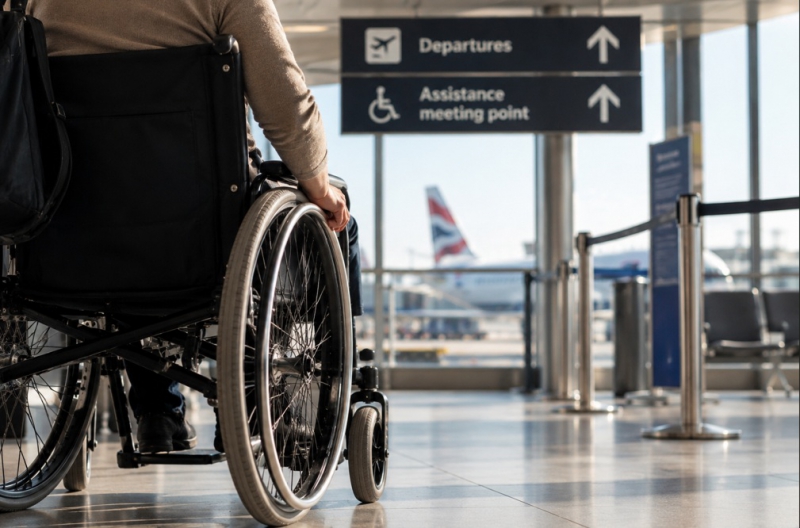
 Illustrative image generated using AI
DISABLED passengers will be better protected from having wheelchairs damaged when they fly and will receive better support from trained airport and airline staff, as new accessibility improvements are rolled out across the aviation industry.
The changes will help tackle the barriers many disabled people face throughout their journeys:- helping them access clear information, receive appropriate assistance at the airport, and have the peace of mind their wheelchairs will be handled carefully by staff while in transit.
More than 1,000 wheelchairs were damaged in transit in 2024 alone, equivalent to more than 80 every month. For passengers who rely on wheelchairs every day, a damaged wheelchair can mean losing their independence, missing out on hard-earned holidays or vital work meetings, facing lengthy waits for specialist repairs, and suffering physical and mental health impacts.
The changes were driven forward following recommendations from former Paralympian Baroness Tanni Grey-Thompson, who led an investigation into aviation accessibility.
They are being implemented thanks to the Aviation Accessibility Group, a cross-industry advisory group established by the Department for Transport to improve air travel for less mobile passengers.
Heidi Alexander, Transport Secretary, said:- “I’d like to say a huge thank you to the Group for everything they are doing to improve the experiences of disabled passengers flying in and out of our airports. People must be able to fly with dignity and peace of mind – for disabled passengers this means not worrying about their wheelchair coming back in one piece, or whether staff will be there to support them around the airport. We’ve backed industry to overhaul staff training, prevent damage to mobility aids and create easy, simple ways for passengers to share key information before they fly, so they can travel with greater confidence."
The changes come as a new report by the Aviation Accessibility Implementation Group highlights progress is being made in making air travel more accessible for disabled passengers, with improvements shaped by passengers’ own experiences.
The Co-Chairs of the Aviation Accessibility Implementation Group, said:- “Our work over the past year has been led jointly by industry – from across the aviation sector – and by the expertise of accessibility professionals. This report is by no means the end of the story – there is much more to be done - but we have made a positive start. We will be focussing now on embedding more of the changes that are needed to enable disabled people to fly with confidence and dignity."
For example, a standardised form was introduced in March this year, allowing passengers to share wheelchair battery and handling information before travel, cutting the risk of devices being damaged in the hold.
Staff awareness has also been strengthened through training designed with disabled passengers, helping staff recognise different needs, and provide the right support without people having to repeatedly explain their disability.
A new digital platform is also set to be trialled, enabling disabled passengers to provide their support needs before they travel, so help can be better prepared in advance. This could include buggy assistance in airports, access to separate assistance queues at security checkpoints, or a quiet waiting area before departure.
The Group has focussed on the information needs of disabled air travellers throughout the whole journey from trip planning to arrival and is pushing for greater co-ordination between airline and airport websites and simple:- “1 click” access to information.
Airlines, airports and mobility aid manufacturers have also joined forces in a UK-1st partnership to ensure wheelchairs and other mobility aids, particularly those with lithium batteries, are safe to carry and better handled in transit.
Tim Alderslade, Chief Executive at Airlines UK, said:- “UK airlines are absolutely committed to making air travel accessible for everyone, with the number of passengers requiring assistance up nearly 10% year on year. 82% report that they are satisfied with their air travel experience which demonstrates the efforts and progress airlines are making for those who require additional support when they fly. We welcome the collaboration across industry and Government on this important issue and remain committed to working together to build on this progress to ensure every passenger can travel with confidence.”
Karen Dee, Chief Executive of AirportsUK, said:- “Airports invest heavily and work constructively with groups, including the Aviation Accessibility Implementation Group, to improve services for passengers requiring additional support. The latest data from the CAA shows high levels of satisfaction with accessibility services at airports and notable improvements year-on-year, despite a doubling of demand for them in the last 10 years. Our members are committed to ensuring everyone can travel with confidence and enjoy the benefits of air travel.”
Industry has already taken steps to improve accessibility for passengers.
For example, London Gatwick produced a new disability training video last year, to show all staff the lived experiences of disabled passengers, and ensure a consistent, respectful approach to accessibility across the airport.
Luton has also introduced detailed accessibility maps, and independent journey materials to help ensure a simple and inclusive experience for assisted travel passengers.
The report comes as the Government’s Civil Aviation Bill progresses through Parliament, which will give air passengers stronger protection and consumer rights.
This includes allowing swifter, stronger action to be taken by the independent aviation regulator, including fines, when airlines or airports don’t properly support disabled passengers, or compensate cancelled flights.
The Bill will also remove the compensation cap for lost or damaged wheelchairs and mobility aids on domestic UK flights, to ensure compensation is appropriate for any damage.
A consultation will also launch on a range of accessibility reforms within 12 months of the Bill receiving Royal Assent.
This comes after Government scrapped extra charges for parents sitting with their children, to help families with the cost of living:- part of the Prime Minister’s efforts to provide ‘everyday fixes’ that give people some breathing space.